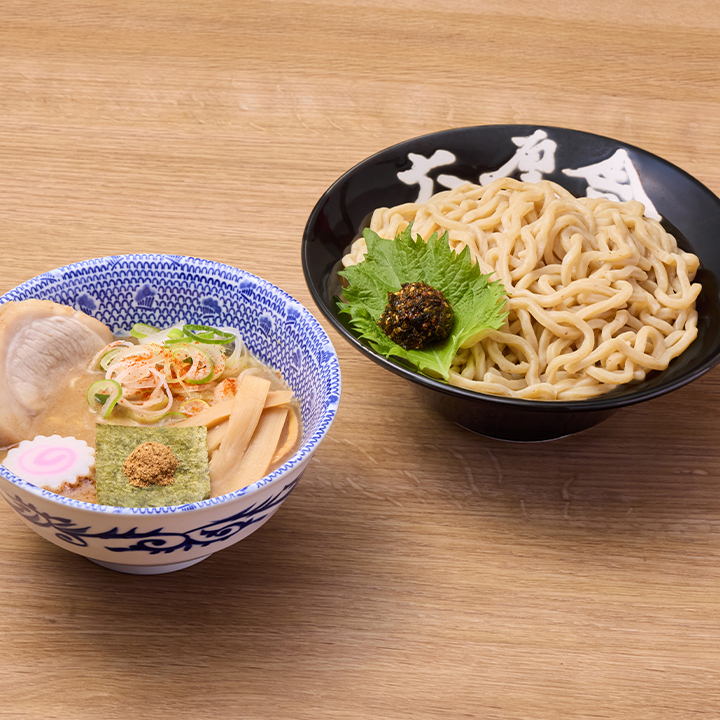
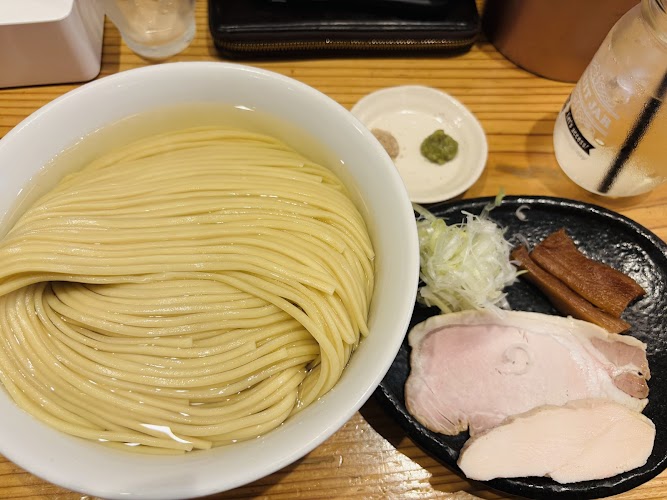
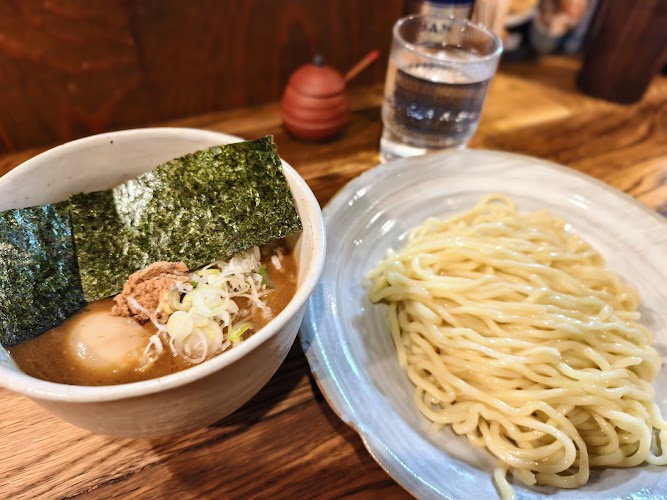
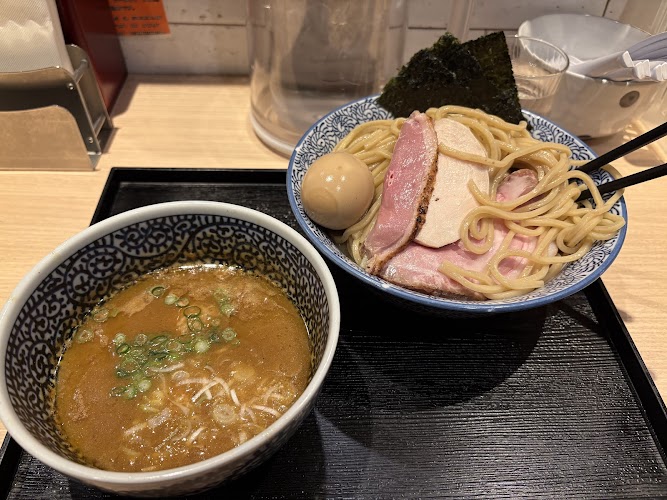
If you want to understand how much Tokyo has reshaped ramen in the last 30 years, eat a tsukemen. It's the modern invention that has most dramatically changed what "ramen" means in the capital — and it's now one of the most competitive categories in the city, with specialist shops winning Tabelog's top rankings every year.
Why the broth is so thick
Tsukemen broth is not meant to be drunk as-is. It's engineered to cling to the noodles when you lift them out of the dip cup, carrying enough flavor to season the noodle without the volume of a standard ramen soup. This means tsukemen broth is typically 3–4 times as concentrated as standard ramen broth: thicker, saltier, heavier, and packed with more dashi, pork collagen, and fish stock.
The most influential modern school is "gyokai-tonkotsu" (seafood + pork bone), pioneered by Menya Rokurinsha in the early 2000s. It combines a creamy pork broth with a heavy dose of dried fish powder — bonito, sardine, mackerel — producing a broth that tastes simultaneously meaty and marine.
Soup wari: don't skip it
At the end of your meal, you'll be left with a cup of very thick, very intense broth in the bottom of your dipping bowl. Hand it back to the counter and say "soup wari onegaishimasu" (soup dilution please). The staff will pour hot dashi into the bowl and hand it back. You now have a drinkable soup — and you've just had the "second course" of the meal.
Where tsukemen shines
Rokurinsha's Tokyo Station branch is the most accessible tsukemen experience for travelers — it's inside the Ramen Street food arcade on the basement level, with photo menus, English ticket machines, and an English-speaking queue manager. For something more serious, look for shops on our list rated 3.8+ on Tabelog with short waits.