Fuunji
風雲児
Bucket List — Worth the effort
This shop is not easy to visit as a tourist — expect long waits, limited English, and a traditional ordering process. But that's the point. This is the real thing, and the experience is part of the story.
Traveler tip: Cash, IC card (Suica/Pasmo), or credit card all accepted at the touch-panel ticket machine (English + photos). Plan to queue 45–90 min at lunch — the shortest windows are right at 11:00 open, around 14:00, or right at 17:00 reopen.
Signature bowl
Recognition
For travelers
Based on public sources and AI research. Not personally verified — confirm before visiting.
Why this shop
Fuunji is the shop that brought tsukemen into the Shinjuku mainstream. It opened in 2007 on a quiet side street near Shinjuku South, and within a few years had become one of the most talked-about ramen shops in Tokyo — Tabelog sits at 3.77 with thousands of reviews, and the shop has been selected for the Tabelog Ramen TOKYO 100 list multiple years running. English-language ramen writers have covered it relentlessly, which matters for how you find it: most travelers will have seen Fuunji mentioned somewhere before they land in Tokyo.
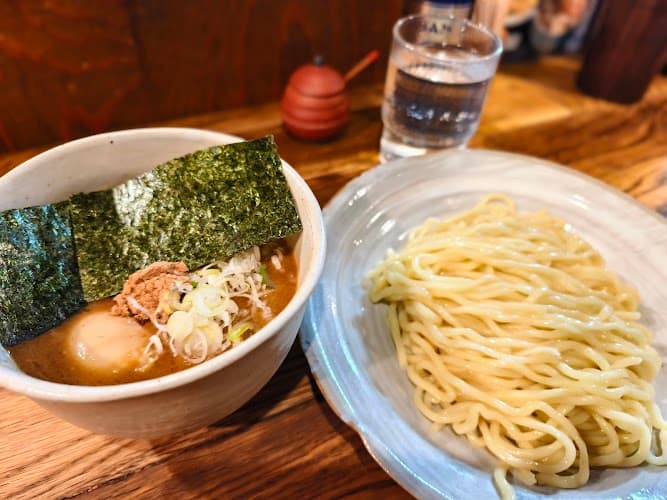
The broth is the reason. Fuunji's base is a chicken paitan rather than the pork-bone broth that defines most rich tsukemen — the soup is chicken carcass simmered for hours with kelp (konbu), bonito flakes (katsuobushi), and urume sardines, then finished at the counter with a dusting of dried fish powder. The result is a thick, rust-colored emulsion that coats noodles like a glaze. This chicken-forward direction was unusual when it launched. The dominant tsukemen school at the time was gyokai-tonkotsu — the pork + seafood style pioneered by Rokurinsha in the early 2000s — and Fuunji's clean break toward chicken produced a tsukemen that tastes deeply savory and marine without the heavy collagen weight of pork.
The noodles are thick, straight, and chewy — the standard modern tsukemen build, served chilled so the broth does the work. The default portion is generous. Standard noodle upsize (大盛, ohmori) is free, and a larger 麺特盛 (men-tokumori) is available for +¥150 if you really want to push it.
What to order
Order the 特製つけ麺 (Tokusei Tsukemen, ¥1,200). This is the signature, and the "special" version comes with the full topping set: extra chashu, a seasoned egg, and a thicker cut of pork. The standard Tsukemen (¥1,000) is also good but the "tokusei" upgrade is worth the ¥200 difference on a first visit.
Noodle size: default is already plenty, but 大盛 (ohmori, extra noodles) is free if you ask, and 麺特盛 (men-tokumori, the biggest size) adds ¥150 on top. At the end of your meal, hand the dipping cup back and say "soup wari onegaishimasu" (スープ割りお願いします). The staff will dilute your remaining broth with a lighter chicken dashi and hand it back as a drinkable soup — the second course of the tsukemen ritual.
Fuunji also serves a hot chicken-seafood ramen (ラーメン, ¥950) for people who don't want the dipping format, but on a first visit stay with the tsukemen.
Practical notes
Fuunji sits in the basement of the Hokuto Daiichi Building, about a 5-minute walk from the South Exit of Shinjuku Station (JR lines) or 2 minutes from Minami-Shinjuku Station (Odakyu). From the JR South Exit, head west along Koshu Kaido (甲州街道) toward Yoyogi, pass under the overhead expressway, and the shop is in a building basement on the left. You will almost certainly see the queue from across the street.
The ticket machine sits right inside the entrance, before you queue for seats. It is a touch-panel with an English toggle and photos for every item — press the language button in the corner to switch, then tap your bowl. Hand the ticket to the staff when you are seated. Seating is 15 counter seats only — no tables. The counter is tight; bags go overhead.
Payment is flexible for a shop of this size: the ticket machine accepts cash, IC card (Suica/Pasmo), and credit cards. Have around ¥1,200–1,500 ready in whichever form you prefer. The shop closes mid-afternoon (15:00) and reopens at 17:00 for dinner, and when the soup runs out the shop shuts early — arrive earlier in each service block, not later.
How to visit
Fuunji is a Dedicated Trip in the sense that you have to plan around the queue, not the location — it is one of the most convenient top-tier ramen shops in Tokyo, sitting minutes from one of the world's busiest stations. The challenge is the line.
The honest math: if you arrive at 12:30 on a weekday you will wait 60–90 minutes. If you arrive at 11:00 sharp, the wait is usually 20–30 minutes because you are in the first seating. The other short window is right before the 15:00 soup-out (arrive 14:00, sometimes 20 minutes) or right at 17:00 reopen. On weekends, every window is longer; budget 90+ minutes and bring something to read.
No reservations — the shop does not take them. Walk-ins only, first-come-first-served, payment ready (cash, IC card, or credit card). There is no bathroom line dancing or seat-saving; the queue manager keeps things strict. When you get to the counter, the bowl comes fast and you are expected to eat it attentively — this is not a shop to linger in. Allow 90 minutes total from arriving to walking out, including the queue.
Related guides
Practical info
| Address | B1F Hokuto Daiichi Building, 2-14-3 Yoyogi, Shibuya-ku, Tokyo |
| Nearest station | Shinjuku Station (JR Lines) South Exit / Minami-Shinjuku Station (Odakyu) |
| Walk time | 5 min |
| Hours | Mon–Sun 11:00–15:00, 17:00–21:00 (closes when soup sells out) |
| Wait — weekday lunch | 45–90 min at peak (12:00–13:30); 20–40 min near 14:00 or right at 11:00 |
| Wait — weekday dinner | 30–60 min typical |
| Wait — weekend | 60–120 min at peak |
| Reservation | Walk-in only |
| Map | Open in Google Maps |
Last verified on April 20, 2026. Prices and hours may change — always check official sources before visiting.