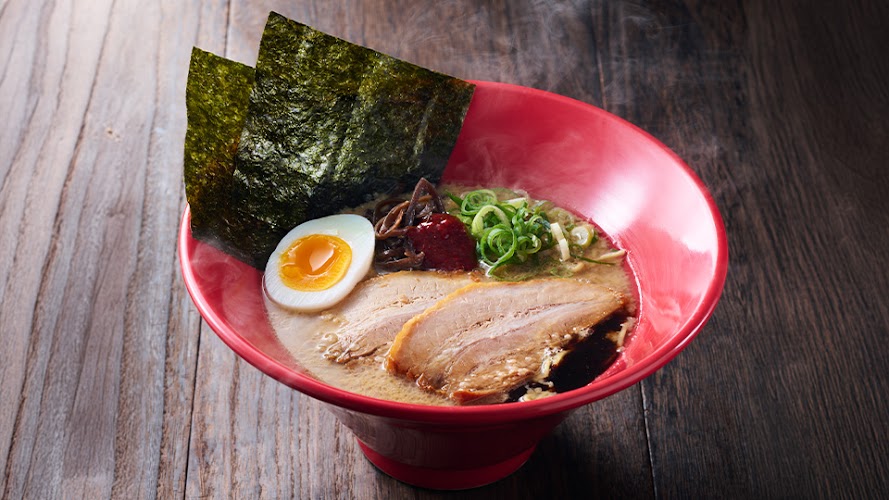
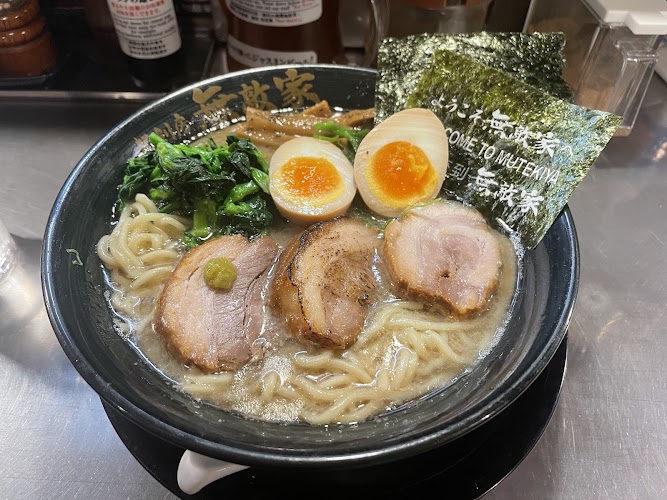
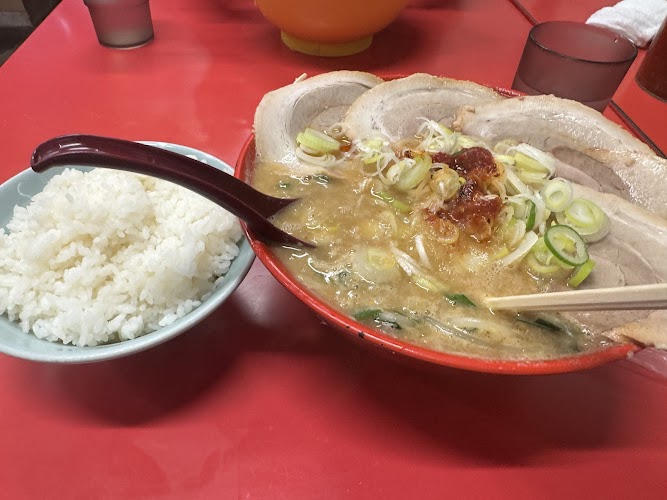
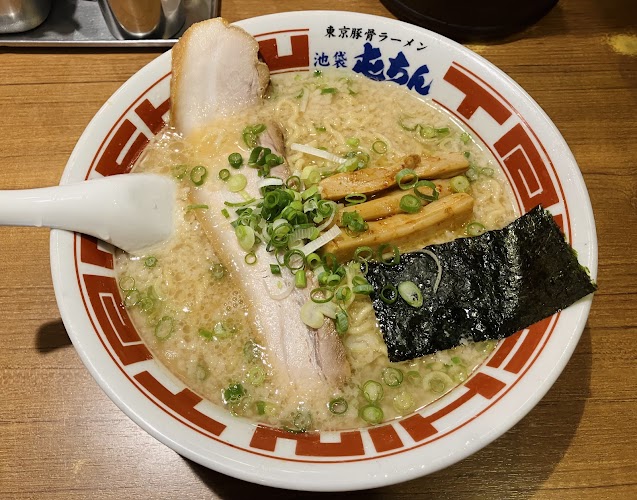
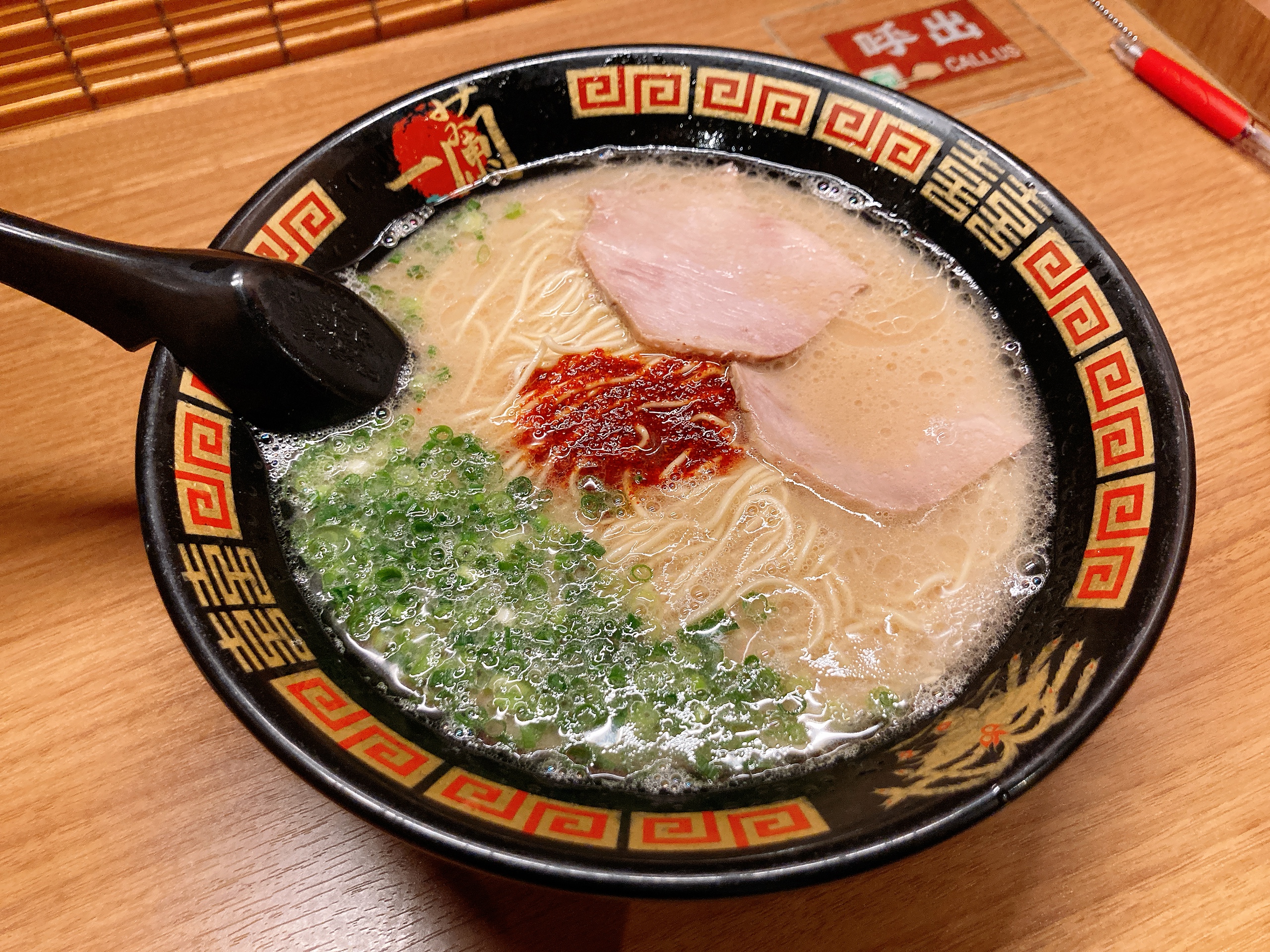
Tonkotsu is the gateway drug of Japanese ramen for most foreign visitors, and for good reason: it's the richest, most comforting, most meat-forward bowl in the canon. The broth is made by boiling pork bones — usually a mix of leg, back, and head — at a rolling boil (not a simmer) for hours until the marrow, collagen, and fat emulsify into a milky, almost creamy liquid. The result is a soup that coats the noodles like a light sauce.
Two schools: Hakata vs. Tokyo
The original style comes from Kurume and Hakata (Fukuoka), lean-tasting despite its richness, served with thin quick-cook noodles and a minimalist toppings set: a slice of chashu, chopped scallion, sometimes a sheet of kikurage mushroom. The Tokyo interpretation — popularized by chains like Ippudo and Ichiran from the 1990s onward — tends to be slightly sweeter, more aromatic, with softer toppings and a more decorated bowl.
The kaedama ritual
A hallmark of Hakata tonkotsu is kaedama — a second portion of noodles you can order mid-meal when your first portion is nearly finished but the broth is still rich. You raise your hand, say "kaedama" (pronounced kai-eh-dah-mah), and a small plate of freshly boiled noodles arrives within 30 seconds to drop into your remaining soup. It's typically ¥100–200. At most chains, English staff will understand "one more noodle please" if the Japanese word trips you up.