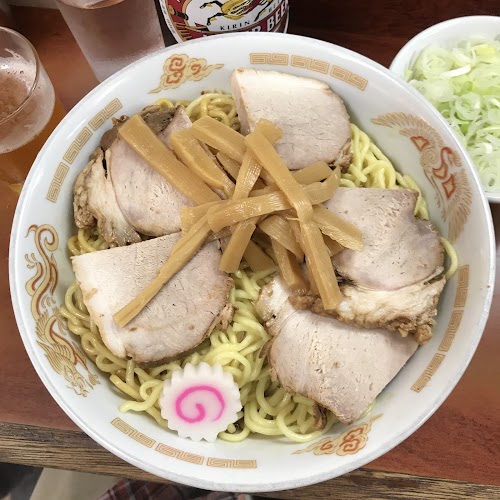
Abura-soba began as a budget student meal near Tokyo's western universities in the 1950s, and has since evolved into one of the city's most distinct noodle categories. There is no soup — just thick noodles, a dark tare pooled at the bottom of the bowl, and a slick of aromatic oil. The flavor is concentrated, the texture bold, and the whole thing is more forgiving of being eaten slowly than any soup ramen you'll find.
Mazesoba vs. abura-soba
You'll see two terms on menus: abura-soba (油そば) and mazesoba (まぜそば). They're closely related — both are soup-less noodle bowls mixed at the table — but they come from different traditions.
Abura-soba is the older style: minimal toppings (chashu, menma, nori, negi), tare and oil pooled at the bottom that you mix in yourself. Mazesoba was invented in 2008 by Menya Hanabi (麺屋はなび) in Nagoya as Taiwan mazesoba (台湾まぜそば) — a more theatrical bowl piled with ground pork, nira chives, raw egg yolk, garlic, and fish powder that arrives pre-sauced. Tokyo's most widespread mazesoba chain is Menya Kokoro (麺屋こころ), with locations across the city.
How to mix
The mixing technique matters. When your abura-soba arrives, the tare and oil are at the bottom of the bowl, under the noodles. Take your chopsticks and lift the noodles from underneath, repeatedly, for 20–30 seconds — until every noodle glistens evenly. Then taste, and add a splash of vinegar (for brightness) and chili oil (for heat) from the condiments on the table.
This isn't optional. An unmixed abura-soba is a pile of dry noodles sitting on a puddle of dark liquid. It only works once you've stirred.
What to expect
Abura-soba portions look smaller than soup ramen because there's no broth filling the bowl — but the flavor is more concentrated. Expect it to hit harder than a standard shoyu bowl, especially after you add condiments. Many shops offer oi-meshi (追い飯): at the end of the meal, you request a small scoop of rice, drop it into the residual tare at the bottom of the bowl, and mix it in. It's the abura-soba equivalent of soup wari — a way to finish the bowl cleanly and get one more hit of flavor from what's left.