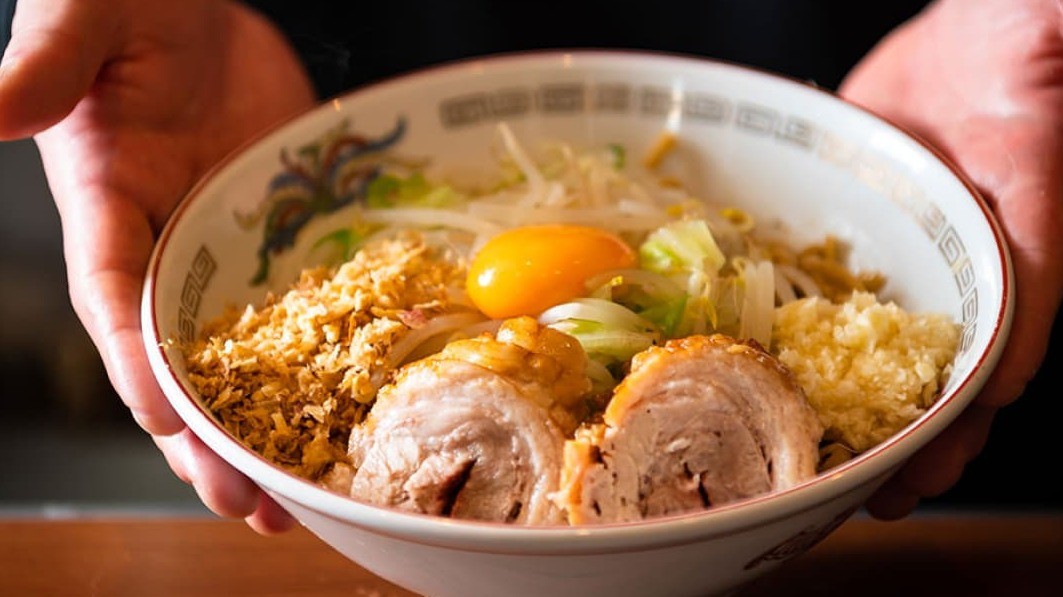
Jiro-style ramen — "Jiro-kei" — is less a ramen and more an event. A standard bowl at a Jiro shop weighs over a kilogram and contains 300g of noodles, 300g of bean sprouts and cabbage, two thick slices of pork, and a sea of garlicky pork-fat broth. The cultural shorthand in Japan is: "this isn't food, it's a challenge."
Why we're including it on a tourist-friendly list
We hesitated. Direct-lineage Ramen Jiro shops — Mita, Meguro, Kameido, Shinjuku Kabukicho, and a dozen others — are famously unwelcoming to people who don't know the ritual. They have Japanese-only ticket machines, unwritten rules about where to place your ticket, strict expectations about eating speed, and a counter culture that can feel hostile to outsiders.
But Jiro-style is also one of the most uniquely Japanese food experiences a traveler can have, and there's an entire parallel ecosystem of "inspire-kei" shops — Buta-yama (豚山), Yarō Ramen (野郎ラーメン), and others — that serve the same style with English-friendly ticket machines, photo menus, and a relaxed atmosphere. These are the shops we include on this list.
How to "call" your toppings
When the staff asks for your toppings — typically just before they serve your bowl — you give a call like:
- "Yasai" — normal vegetables (always say this)
- "Yasai mashi" — extra vegetables
- "Ninniku" — add garlic
- "Abura" — add extra fat
- "Karame" — add extra soy tare (stronger flavor)
If you're uncertain, just say "zen-bu futsuu" (everything normal) or even just nod. At inspire-kei shops the staff will usually explain in English.
One rule: finish the broth, or don't order it
In Jiro culture, leaving the bowl unfinished — especially the vegetables — is considered poor form. You do NOT need to drink all the broth, but you should eat all the solids. If 300g of noodles scares you, look for shops that offer a "puchi" (プチ) or "half" option. Every inspire-kei shop we feature on this list has one.