Butayama
豚山
Traveler tip: The traveler-friendly entry point to Jiro-style ramen, now inside Shibuya Sakura Stage — a 2-minute walk from the station's south exit. Photo-based ticket machine, relaxed atmosphere, and staff patient with first-timers. Order the small. Yes, really, the small.
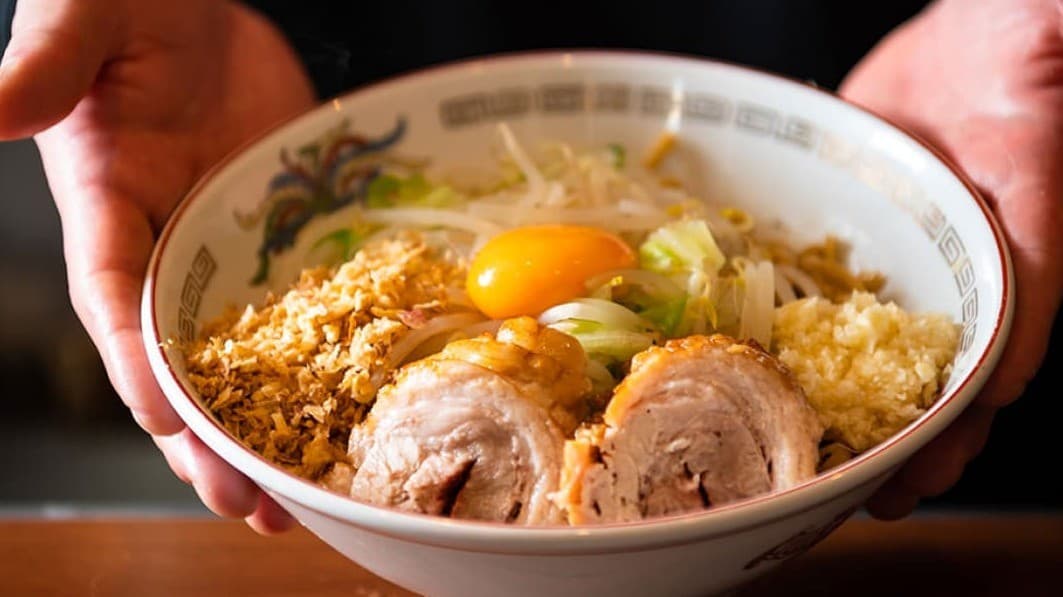
Signature bowl
Recognition
For travelers
Based on public sources and AI research. Not personally verified — confirm before visiting.
Why Butayama is on this list
Jiro-style ramen — the cult subculture of massive portions, mountainous vegetables, heavy garlic, and thick noodles that started at Ramen Jiro near Keio University's Mita campus in 1968 — is one of the most uniquely Japanese food experiences a traveler can have. It's also almost completely off-limits to first-time visitors.
The direct-lineage Ramen Jiro shops have Japanese-only ticket machines, veteran regulars who expect silent efficient eating, and unwritten rules about where to set your ticket and when to call your toppings. Foreign visitors who don't know the ritual will have a stressful time, and the regulars will have a stressful time watching them.
Butayama is the solution. It's an "inspire-kei" (インスパイア系) Jiro shop — same style, different culture. It's run by the Gift Group (the same company behind Machida Shoten), which means photo-based ticket machines, relaxed atmosphere, staff who are used to explaining the toppings call to first-timers, and consistent quality across multiple branches.
What to order
Order the Buta Ramen (Small) — "Sho," 小 (¥1,000). Yes, the small. The small at Butayama is roughly the size of a large bowl at any other ramen shop. A regular Jiro-style bowl contains 300g of noodles, double a standard ramen portion. The small is 200g, which is still more than you want to eat if you've never had Jiro-style before.
Trust us. Order the small. You can order a second bowl if you still want more.
The toppings call
When the server asks about toppings — usually just before they hand over your bowl — you give a short verbal call specifying four things:
- Ninniku (garlic): yes / no
- Yasai (vegetables): normal / more / much more
- Karame (stronger tare): yes / no
- Abura (extra fat): yes / no
For your first Jiro experience: say "zenbu futsuu" (everything normal). If you're still uncertain, hold up one finger for "mild" and the staff will configure a beginner-friendly bowl. At Butayama, unlike direct-lineage shops, the staff are patient with foreign visitors figuring this out.
If you have a meeting or a date later: say "ninniku nashi" (no garlic). Jiro-style bowls contain enough garlic to last 24 hours of social exile, and there's no way to de-garlic once it's in.
Why we chose Butayama specifically
- Ticket machine has photos, so you can point if your Japanese fails.
- Staff explain the toppings call in simple English at this branch.
- Located inside Shibuya Sakura Stage, a 2-minute walk from Shibuya Station's south exit — the most accessible Jiro-style shop for travelers.
- Less intimidating atmosphere than direct-lineage Jiro shops, where silence and speed are expected.
Practical notes
- This is a heavy meal: Do not plan a second food activity for at least three hours afterward.
- The noodles go soft fast: Eat efficiently. Jiro-style noodles are designed to be eaten hot and firm.
- Finish the vegetables: It's considered poor form to leave the vegetables uneaten. Finish the broth only if you want to.
Related guides
Practical info
| Address | 1-4 Sakuragaoka-cho, Shibuya-ku, Tokyo (Shibuya Sakura Stage) |
| Nearest station | Shibuya Station (any line) |
| Walk time | 2 min |
| Hours | 11:00 – 22:00 (daily) |
| Wait — weekday lunch | 15–30 min |
| Wait — weekday dinner | 10–20 min |
| Wait — weekend | 20–40 min |
| Reservation | Walk-in only |
| Map | Open in Google Maps |
Other Tokyo locations
Last verified on April 29, 2026. Prices and hours may change — always check official sources before visiting.