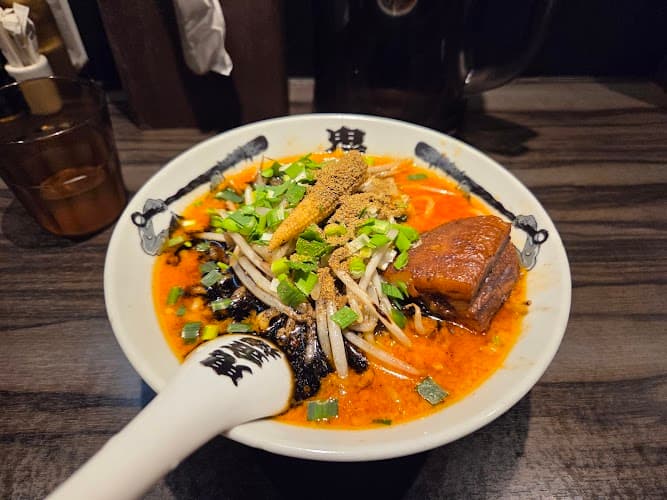
Karashibi Miso Ramen Kikanbo Kanda Honten
カラシビ味噌らー麺 鬼金棒 神田本店
Large chain — multiple locations
This shop has multiple locations across Tokyo and beyond. The experience is standardized and highly accessible for tourists. Individual shops may vary — check the details below for information on this specific location.
Traveler tip: Order the signature Karashibi Miso Ramen (¥1,080) and pick a spice level and sansho numbness (両方 futsu = standard is a safe starter). English menu, credit card and QR accepted (IC cards not accepted), ticket machine with photos. Expect a 30-60 min queue at peak.
Signature bowl
Recognition
For travelers
Based on public sources and AI research. Not personally verified — confirm before visiting.
Why this shop
Kikanbo is Tokyo's definitive entry point for karashibi miso ramen — a miso bowl tuned around two axes: karashi (辛) for chili heat and shibi (痺) for the tingling numbness of Japanese sansho pepper. The shop opened in 2009 in Kanda as a small counter shop and built a reputation for a style that was, at the time, unusual in Tokyo. A decade later, karashibi is its own category, and Kikanbo still runs the best version of it.
The base is a thick miso broth — classic Tokyo miso structure, pork and chicken broth emulsified with a blend of miso pastes — but the finish is a wok-stirred topping of ground pork, bean sprouts, chili oil, and freshly ground sansho. Every bowl is customized: when the staff asks, you pick one level each for spice and sansho (levels run from 抜き nuki/none up through 鬼増し oni-mashi/extreme). The result is a bowl that, at mid settings, reads as a rich miso with a warming tingle; at the top end, it's a challenge.
The noodles are thick, yellow, and chewy — exactly the build Sapporo-style miso ramen calls for, because thin noodles cannot carry a broth this heavy. Toppings run fat: big chashu, a pile of bean sprouts, chopped cilantro on request. It is not a restrained bowl. It is not meant to be.
What to order
Order the カラシビ味噌らー麺 (Karashibi Miso Ramen, ¥1,080). This is the signature and the bowl the shop is known for. When the staff takes your order, they will ask for two levels: 辛さ (karashi, spice) and シビ (shibi, sansho numbness). The options are:
- 抜き (nuki) — none
- 少なめ (sukuname) — light
- 普通 (futsu) — standard
- 増し (mashi) — extra
- 鬼増し (oni-mashi) — extreme (small surcharge)
On a first visit, "futsu/futsu" (standard on both) is the right call — it gives you Kikanbo's intended balance without risking a bowl you can't finish. If you are confident with spice, go mashi/futsu. Oni-mashi is a stunt; the standard-level bowl is already intense.
Add-on cilantro (パクチー) topping is available and pairs well with the sansho. If you are not a spice person at all, the shop also serves a non-spicy miso tsukemen and a shoyu variant, but those are sideshows — on a first visit, eat what the shop is famous for at a sensible setting.
Practical notes
Kikanbo sits a 2-minute walk from the Kajicho (northeast) side of Kanda Station (JR Yamanote / Keihin-Tohoku / Chuo lines; Tokyo Metro Ginza line). Exit toward Kajicho, follow the small side street, and look for a black-fronted shop with a red devil motif.
The shop opens daily at 11:00. Monday through Saturday (and holidays) it runs through to 21:30 with no mid-afternoon break; Sundays close early at 16:00. There are 15 counter seats only. A queue is almost constant — at peak lunch (12:00–13:30) and dinner (18:30–20:00) expect 30–60 minutes. Off-peak windows around 14:30–17:00 on weekdays are the quietest.
The ticket machine sits inside the entrance with photo-labeled buttons and English text. Kikanbo is unusual for a traditional ramen shop in that it accepts credit cards and QR payments, not just cash or IC — you can put the whole meal on a card. Staff handle English orders comfortably, and there is an English menu inside.
Why this location
Kikanbo has grown from the single Kanda shop into a small family of locations — Ikebukuro, other Kanda-area shops, and a handful of others — and maintains overseas branches in Taiwan (multiple cities) and Hong Kong (Tsim Sha Tsui). In September 2025 the brand opened its first Singapore location at VivoCity. The recipe and spice-level system are the same everywhere.
We direct travelers to the Kanda Honten (本店) because it is the original shop where karashibi was developed and where the operational standards are set. Kanda is also the easiest shop to slot into a Tokyo itinerary — it is two minutes from a major JR station on the Yamanote Line, on the way between Akihabara and Tokyo Station. If you have eaten Kikanbo overseas, the Honten is still the reference — and the one where the queue is the shortest proof that the bowl is worth it.
Related guides
Practical info
| Address | 2-10-9 Kajicho, Chiyoda-ku, Tokyo 101-0044 |
| Nearest station | Kanda Station (JR Yamanote / Keihin-Tohoku / Chuo / Tokyo Metro Ginza Line) |
| Walk time | 2 min |
| Hours | Mon–Sat & holidays 11:00–21:30; Sun 11:00–16:00 |
| Wait — weekday lunch | 30–60 min (near-constant line) |
| Wait — weekday dinner | 30–60 min |
| Wait — weekend | 45–75 min |
| Reservation | Walk-in only |
| Map | Open in Google Maps |
Last verified on April 19, 2026. Prices and hours may change — always check official sources before visiting.