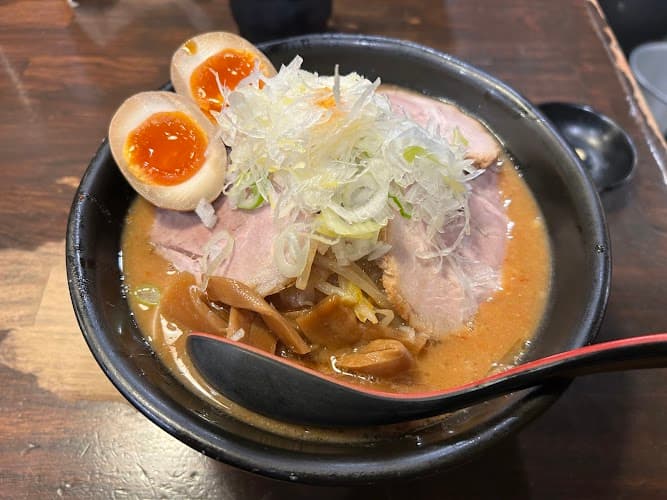
Mendokoro Hanada Ikebukuro
麺処 花田 池袋店
Traveler tip: Cash payment only — no cards, IC, or QR pay. One of the few serious miso specialists in Tokyo; queues are noticeably shorter mid-afternoon (14:00–16:00) than at lunch or dinner peaks.
Signature bowl
Recognition
For travelers
Based on public sources and AI research. Not personally verified — confirm before visiting.
Why this shop
Miso ramen is a Tokyo rarity. Most Tokyo ramen shops treat miso as one option on a diverse menu rather than a specialty, but Mendokoro Hanada (麺処 花田) is a serious miso specialist — and one of the highest-rated miso shops in the city. Tabelog lists the Ikebukuro store at 3.73 with over 3,500 reviews, putting it firmly in the top tier of Tokyo ramen.
Miso ramen was invented in Sapporo in the 1950s as an answer to Hokkaido's brutal winters — a bowl engineered to deliver 1,200 calories of fermented richness when it's minus-ten outside. The style uses a thick, wavy noodle designed to carry the heavy miso broth, and traditionally a pat of butter and a pile of bean sprouts on top. Because the flavor profile depends on the fermented funk of miso paste, the richness of pork fat, and the cold of winter, miso ramen doesn't travel well — mediocre miso in summer feels cloying, while a great miso bowl in January feels like medicine.
Hanada takes this style seriously. The broth is built on a blend of red and white miso with pork and chicken stock and a stir-fried aromatic base. In Tokyo, where miso specialists are rare, Hanada is one of the few shops worth making a trip for — even more so in winter.
What to order
The signature is Miso Ramen (味噌ラーメン, ¥1,100) — the baseline bowl. A thick, miso-forward broth sitting on pork-chicken stock, topped with a generous pile of crunchy bean sprouts, ground pork, menma bamboo shoots, and scallion. The noodles are thick, wavy, and yellow — a classic Sapporo profile, designed to hold up to the heavy broth without going soft.
The standard upgrade is to add butter (¥140) — a small pat that melts into the broth, richening it into something closer to the original Hokkaido version. Regulars also add corn in the colder months. A small bowl of rice (¥100) is a good pairing to soak up the remaining broth at the end of the meal; on weekday lunches, the rice is often offered free of charge.
Practical notes
- Location: 1-23-8 Higashi-Ikebukuro, Toshima-ku, on the 1F of the Higashi-Ikebukuro ISK Building. Five minutes on foot from Ikebukuro Station's East Exit — head along Sunshine 60-dori and turn onto a small side street.
- Hours: 11:00 to 22:30, daily. Closed during the year-end and New Year holidays.
- Seating: Counter only, 16 seats.
- Payment: Cash payment only. No IC card, no credit card, no QR pay.
- Queue: 30–40 minutes at lunch and dinner peaks, noticeably shorter in the mid-afternoon window (around 14:00–16:00). Weekend queues can exceed one hour.
- Order flow: Ticket machine at the entrance — buy your ticket before sitting down. Most buttons include photos of the dish, so the machine is navigable even if you can't read Japanese.
Related guides
Practical info
| Address | 1-23-8 Higashi-Ikebukuro, Toshima-ku, Tokyo (Higashi-Ikebukuro ISK Building 1F) |
| Nearest station | Ikebukuro Station (East Exit) |
| Walk time | 5 min |
| Hours | 11:00 – 22:30, daily (closed for year-end/New Year holidays) |
| Wait — weekday lunch | 30-40 min at peak, ~15-20 min mid-afternoon |
| Wait — weekday dinner | 30-40 min |
| Wait — weekend | 40-60 min (can exceed 1 hour) |
| Reservation | Walk-in only |
| Map | Open in Google Maps |
Other Tokyo locations
Last verified on April 19, 2026. Prices and hours may change — always check official sources before visiting.